Skip to content

How to get started with international e‑commerce

Our guide 'Get Started to international e-commerce' gives you a structured starting point before entering a new market. It covers the areas that shape whether a new market works in practice - from payment methods and return handling to translations, technical setup and visibility.

Built on more than 15 years of experience, and updated each year, the guide walks you through the decisions that matter before you commit to a new market. 

Use it as a planning framework, a checklist for your market expansion or a way to check whether you have covered all the essentials of your current markets.

we are

Trusted by strong brands:

liewood logo
Indiska
Sephora_logo.svg
babysam logo
Matsmart logo
Rapunzel-of-sweden-logo
Søstrene grene logo
skechers1
candy-pop-logo
lakrids-by-bulow
Creativ logo
Box-Colour-EN 1 (2)
What you will learn

Get insights from our specialists

Are you thinking about entering a new market? This guide covers the practical areas that determine whether an international launch will succeed or not: market viability, localisation, translation, technical setup and visibility. Work through them before you commit to a new market.

01
What to prioritise before entering a new market
02
How to adapt your webshop to local expectations
03
What your technical setup needs to handle internationally
04
Why setup and trust matter more than speed

Community

Join our community– get insights straight to your inbox

Tips, cases, and hands-on toolkits from native e-commerce specialists across 21 markets.

🚀 Tips and tricks to help you build trust abroad
✍️ Cases and insights from native e-commerce managers
✂️ Hands-on toolkits that you can apply to your business

Explore

More resources for going international
Cover of the Get started guide
Guide Get Started Guide Our guide to International E-commerce and how to launch your international webshop
Read more →
cover of the content guide
Guide Content Guide Get localised marketing tips and important dates across 12 European markets
Read more →
AI in CS playbook cover
Guide AI in CS Get seven lessons based on insights from 700,000+ conversations across markets.

Read more →
cover of succeed abroad the magazine
Magazine Our Magazine Get Succeed Abroad - The Magazine filled with the best tips on international expansion
Read more →
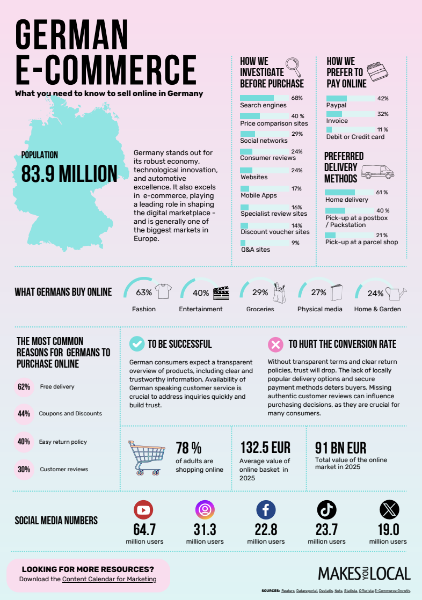
German Market Fact Sheet
Data sheet Market Fact Sheet Exploring consumer spending and e-commerce trends across 12 European markets
Read more →

Want to learn more?

Frequently asked questions

What is the first step when entering a new market? Start by validating the market before you invest in it. Research local customer behaviour, assess the competitive landscape and calculate your expected income per order - factoring in VAT, shipping, returns and payment fees. These figures vary significantly between markets and will tell you whether the opportunity is commercially viable for your business before you commit. Use our guide to validate a new market before entering.
How do return expectations differ across European markets? Return rates and expectations vary a lot. Germany, for example, typically sees higher return volumes than most other European markets, and customers there often expect free returns as standard. So it is important to make sure your return policy is clearly stated and matches local norms - unclear return information is a common reason customers abandon a purchase.
How do I localise my webshop? Localisation covers more than translation of product descriptions and website text. You need to adapt your payment methods to local preferences, offer delivery options that feels familiar to local customers, set up a local return address and ensure your terms and conditions are legally compliant. Each of these affects whether a visitor chooses to buy from you.
What are the most important things when launching in a new European market? The answer depends on your business, your product and the market you are entering. That said, the areas that most consistently affect whether customers trust your webshop enough to buy are payment methods, delivery options, return handling, legal terms and language. Getting these right looks different for every business - a fashion brand entering Germany faces different return expectations than a furniture brand entering the Netherlands. The starting point is understanding what your specific customers expect, and working from there.